STAGE WORK BEGINS WITH ATTENTION.
StageLoom approaches performance as a practical combination of voice, body, focus, and response. Beginners work with short texts, simple blocking, clear objectives, and manageable rehearsal passes so each choice can be noticed, adjusted, and repeated with purpose.

THE PRACTICE APPROACH
PREPARE THE INSTRUMENT
Begin with breathing, articulation, posture, and gentle movement before adding lines, character choices, or stage direction.
DEFINE THE OBJECTIVE
Give each scene a playable need so emotion develops from action, resistance, and response rather than being forced.
MARK THE CHANGES
Use beats, pauses, cues, and shifts of thought to understand where the scene changes direction or gathers energy.
REPEAT WITH ONE FOCUS
Rehearse a short section while adjusting one element, such as projection, eye line, tempo, gesture, or partner listening.
REVIEW WHAT CHANGED
Notice which choice made the scene clearer, which habit returned, and which correction cue should guide the next pass.
FOUR PARTS OF STAGE PRACTICE

VOICE AND BREATH

MOVEMENT AND SPACE

OBJECTIVE AND SUBTEXT
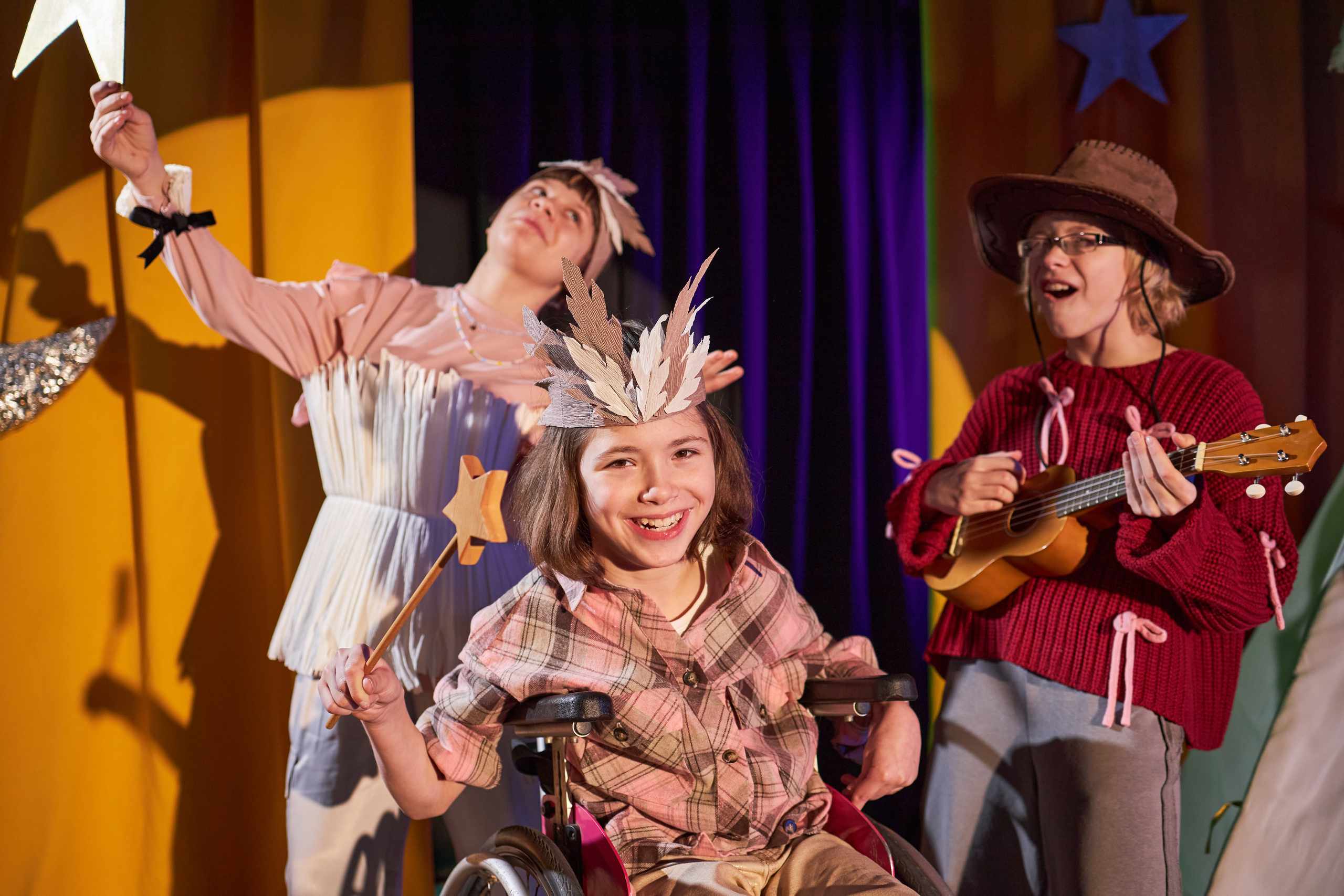
LISTENING AND REACTION
WHAT GUIDES THE WORK
SMALL TEXTS FIRST
Short monologues and dialogues leave room to study phrasing, blocking, reaction, and character intention without overload.
CHOICES BEFORE EFFECTS
Clear objectives, eye lines, and movement cues matter more than decorative gestures or exaggerated displays of emotion.
NOTES YOU CAN APPLY
Corrections stay tied to visible actions, such as slowing a line, holding stillness, or fully receiving a partner’s cue.
PROGRESS YOU CAN NOTICE
Improvement appears through projection, focus, more purposeful movement, and responses that feel less mechanical.